Zebra Mussel & Biofouling Management
Ecological eradication and thermal hydro-jetting of marine intake screens.
Ecological eradication and thermal hydro-jetting of marine intake screens.
Invasive Mussel Control & Biofouling Removal
Zebra and quagga mussel thermal hydro-jetting, cavitation stripping, and biomass vacuum recovery.
Zebra and quagga mussels colonize industrial water intakes, penstocks, ship sea chests, and dock pilings at alarming densities, choking flow and accelerating structural corrosion.
Chow Marine delivers comprehensive invasive mussel eradication and biomass vacuum extraction services across the Great Lakes, St. Lawrence River, and inland waterways.
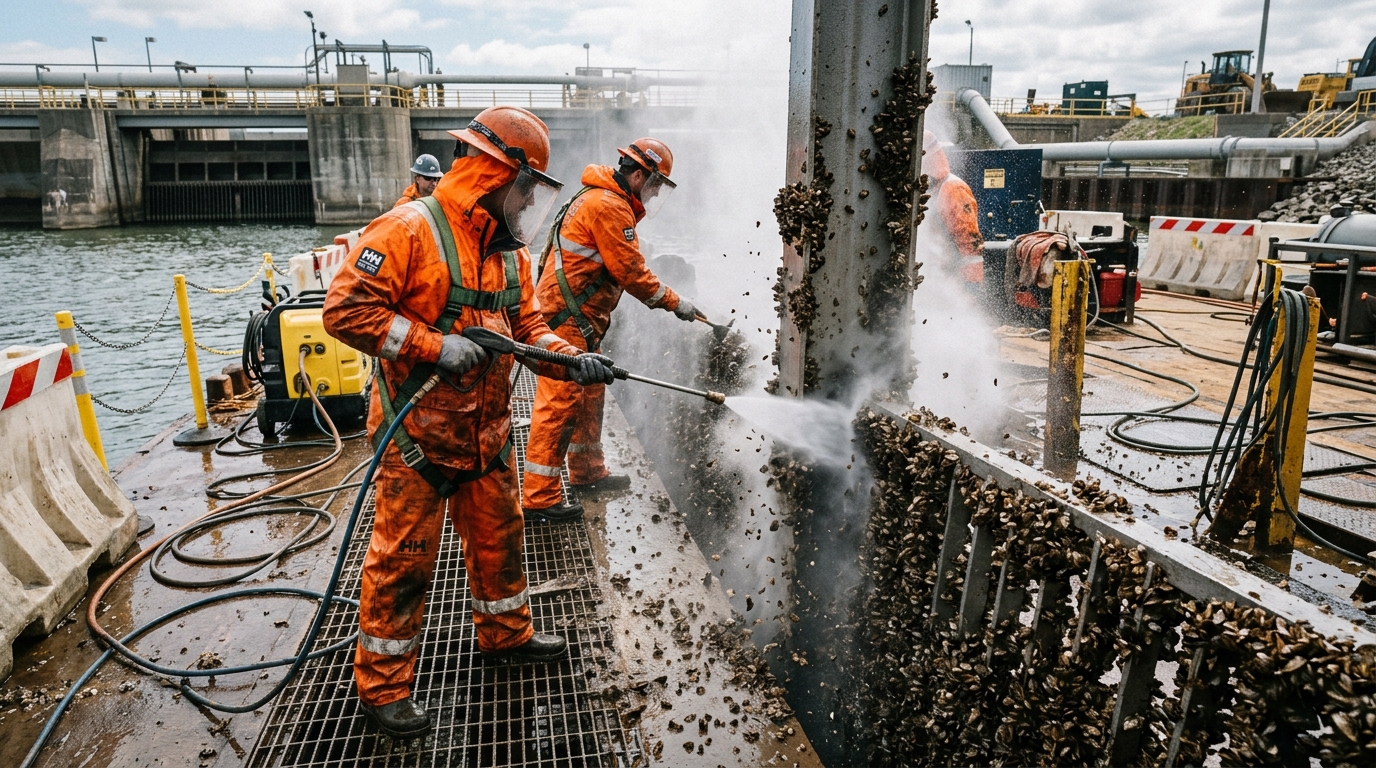
Our specialized high-temperature (up to 95°C) hydro-cleaning units thermally shock and destroy mussel colonies down to the microscopic veliger stage, breaking the calcium adhesive bond without scratching protective epoxy coatings.
Dislodged biological encrustations are captured in real time by high-volume vacuum hoods mounted directly around the jetting nozzles, preventing dead mussel biomass from settling into pump impellers, intake sumps, or protected natural waterways.
Biofouling Density Mapping
Diver/ROV visual and video survey to calculate mussel encrustation thickness (kg/m²) and coverage.
Thermal Hydro-Jetting Setup
Connection of diesel boiler hydro-units supplying 15,000–35,000 PSI water at 95°C with vacuum recovery cowls.
Surface Stripping & Veliger Kill
Simultaneous thermal destruction, hydrodynamic shearing, and vacuum collection of shells and veliger larvae.
Biomass De-Watering & Disposal
Filtration through mobile dewatering bags and certified municipal solid-waste composting transport.
| Thermal Output | Up to 95°C Lethal Thermal Shock |
| Hydro Pressure | 15,000 – 35,000 PSI Variable |
| Biomass Extraction | Up to 12 Tons per Shift Vacuum Collection |
| Coating Preservation | Non-Abrasive Hydro/Cavitation Technology |
| Regulatory Compliance | DFO & Invasive Species Act Certified |
Municipal Drinking Water Intake Deep Mussel Eradication
Complete de-musseling of two 2.4-meter intake cribs and 450 meters of intake pipe in Lake Ontario encrusted with up to 150mm of quagga mussels.
01
Why is hot water hydro-jetting superior to mechanical scraping?
add
Why is hot water hydro-jetting superior to mechanical scraping?
Mechanical scraping leaves microscopic mussel byssal threads and veliger glue behind, which emits chemical pheromones that attract new mussel larvae within days. Hot water (95°C) denatures the proteins, dissolves the adhesive, and leaves steel completely clean.
02
How do you prevent dislodged shells from clogging intake pumps?
add
How do you prevent dislodged shells from clogging intake pumps?
Our jetting nozzles are fitted with continuous vacuum hoods that extract 99% of dislodged shell debris right at the point of contact, pumping it directly to shore dewatering containers.
03
Do you offer preventative foul-release coating recommendations?
add
Do you offer preventative foul-release coating recommendations?
Yes. Following eradication, we can apply silicone-based non-toxic foul-release coatings that prevent future mussel colonization for up to 5 years.
Ready To Mobilize Crew & Tooling?
Connect directly with our Hamilton operations superintendent for emergency rapid mobilization, site evaluation, and firm engineering proposals.